
Understand your body and change your practice
with
Deepika’s Yoga Foundations
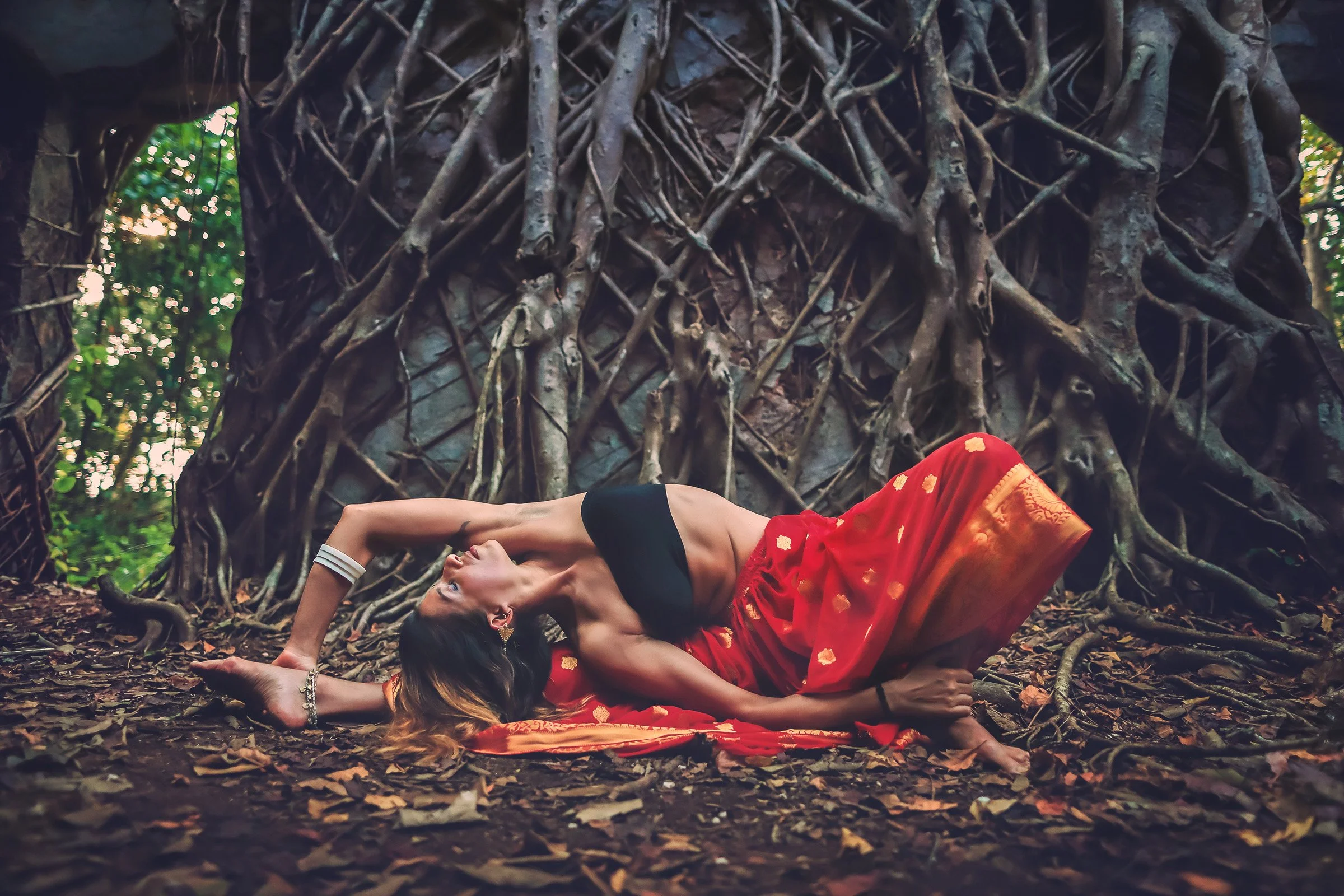
Your body responds when it feels listened to.
As you pay attention to how you move and where effort accumulates, practice becomes quieter and more steady. With time, this way of working carries into daily movement as well.
Technical and embodied approach
Movement, strength, and awareness working together
Four focused workshops
Each one addresses a specific area of the body and practice
Lifetime access
Study and revisit the material at your own pace
That’s why I created Deepika’s Yoga Foundations.
Not as a single sequence to follow, but as a way to understand the body through practice. A structure that allows you to look at movement from different angles, without rushing or forcing change.
Yoga Foundations is made of four focused courses. Each one addresses a specific area where practice often becomes unclear, while staying connected to a shared approach.
You can work with them individually, or explore them together over time.
What matters is starting from the place that feels most relevant right now.
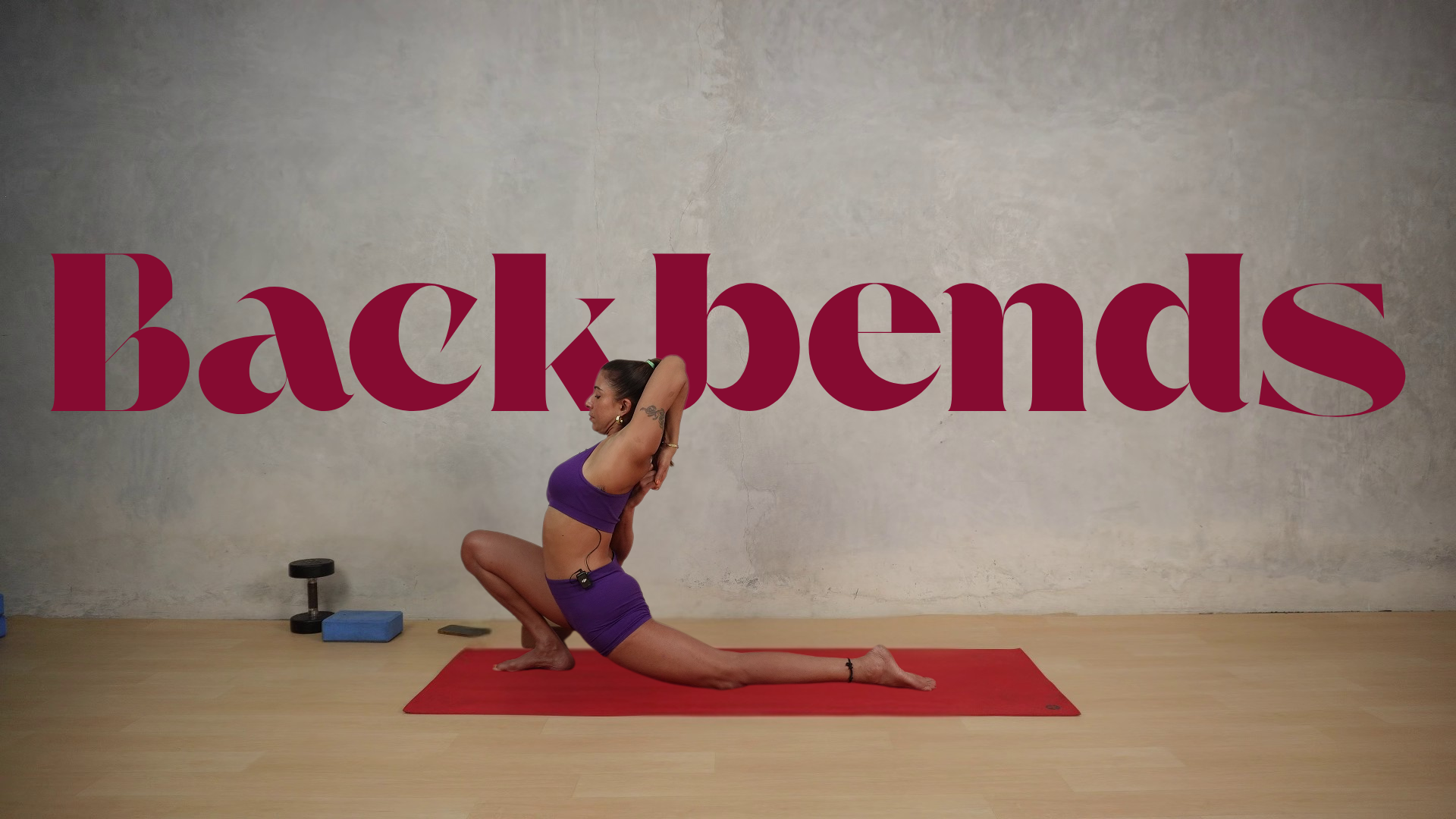
Working with backbends without pain or fear
This course focuses on how backbends are organized in the body, rather than how deep they look. The work starts from support and coordination, so the spine can move without compression or strain.
You’ll work on:
creating space before depth
distributing effort through legs, pelvis, and spine
reducing tension that builds up in the lower back and shoulders
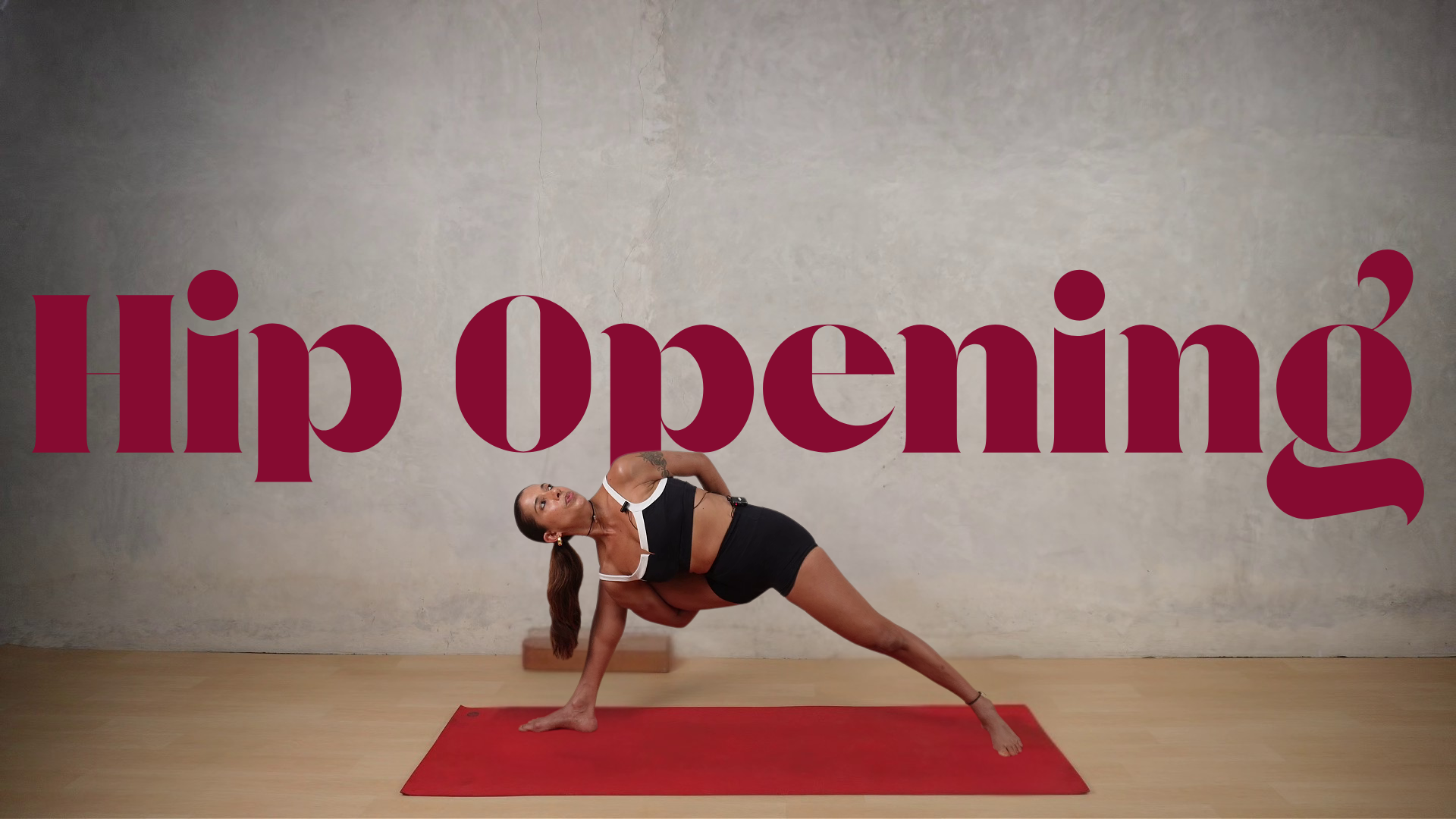
Understanding hip mobility beyond stretching
Hip Opening looks at how the hips actually move, and why flexibility alone is often not enough. The focus is on strength, rotation, and control, so range can develop with more stability and less resistance.
You’ll work on:
active mobility in the hips
external rotation and support for the knees
patterns that limit progress in splits and deep poses
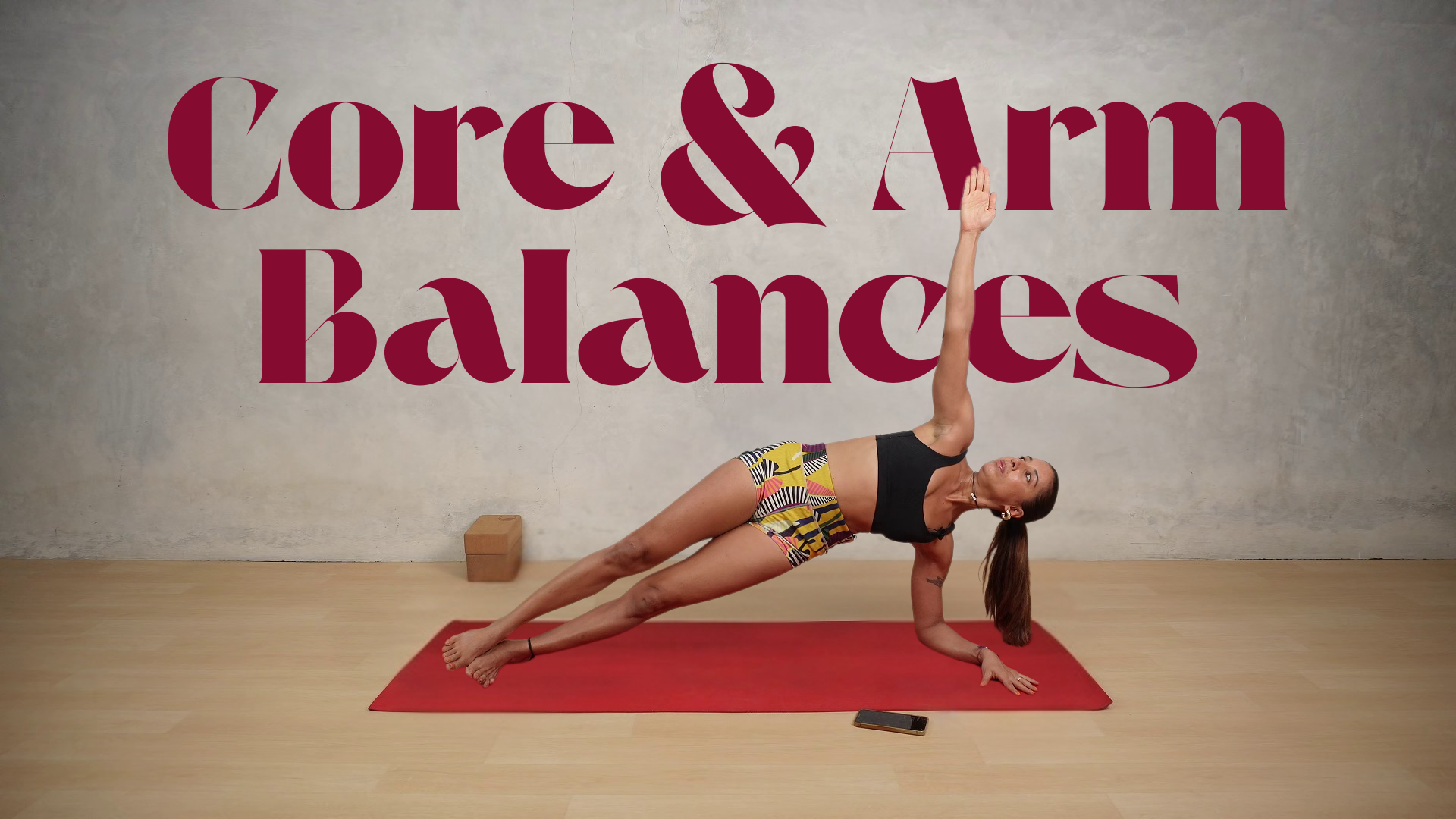
Building strength to support lightness
This course explores how core strength supports balance, transitions, and weight-bearing work. Instead of forcing arm balances, the focus is on organization and support, so effort becomes more efficient.
You’ll work on:
core engagement that supports movement
stability in arm balances and transitions
coordination between strength and control
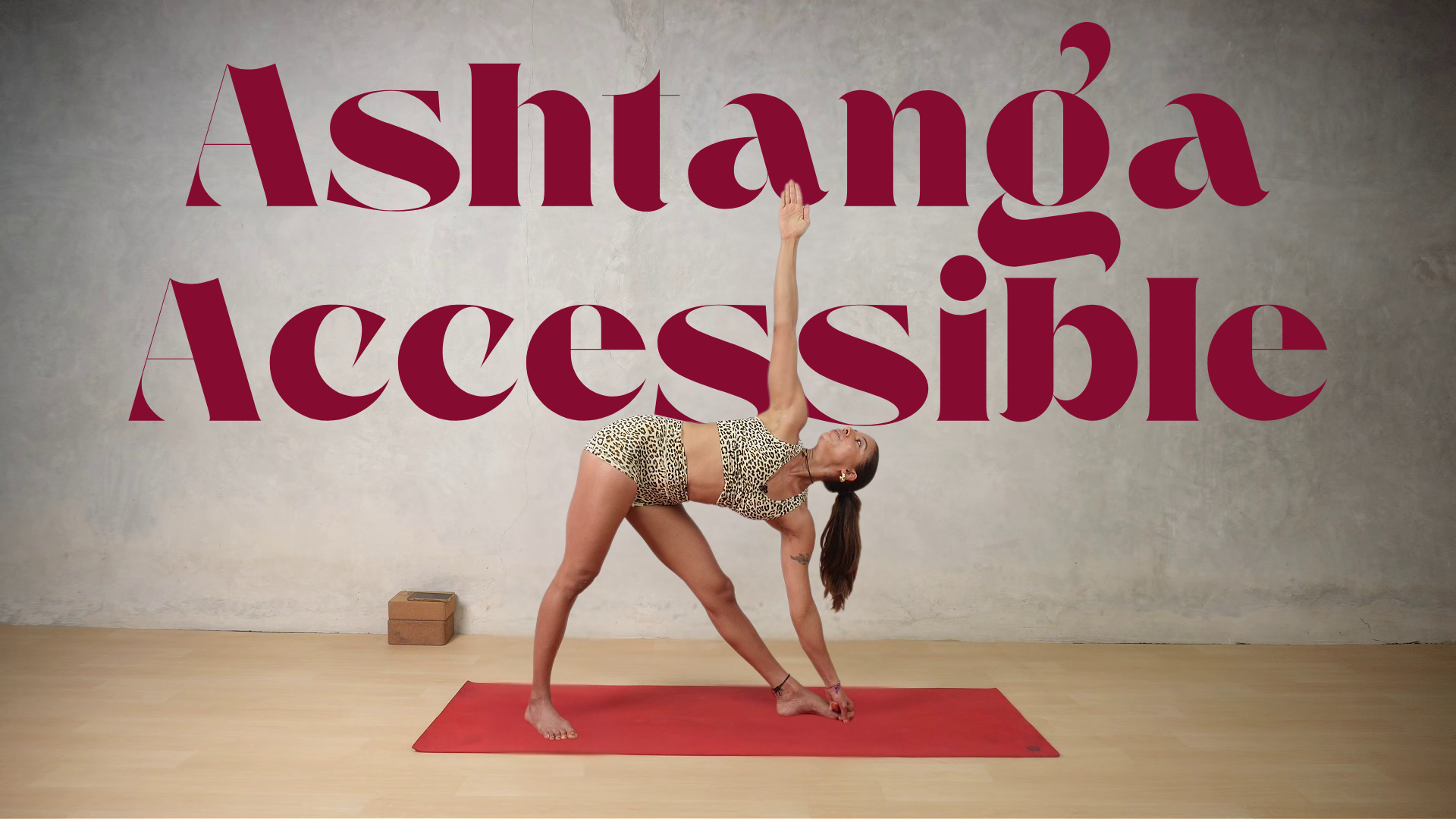
Approaching Ashtanga in a way that adapts to you
Ashtanga Accessible offers a way to work with the structure of the practice without forcing the body into fixed shapes. The focus is on adaptation, sustainability, and continuity over time.
You’ll work on:
modifying the practice without losing its essence
building consistency without overload
staying connected to the practice at different stages
When practice stops feeling supportive
A common turning point in movement and yoga
Many people reach a point where practice stops feeling supportive. Not because the body is incapable, but because it’s being asked to do more than it can integrate.
Movement starts to feel effortful. The same shapes are repeated without a clear sense of how the body is actually working. Sensations are pushed aside, until they show up as tension, discomfort, or fear.
Progress becomes confusing. What once felt nourishing begins to feel heavy, unclear, or disconnected.
This often shows up as:
stiffness that doesn’t respond to stretching
discomfort or pain appearing in specific postures
difficulty supporting the body in transitions or weight-bearing moments
a sense of effort without clear direction
uncertainty about how to continue without risking injury

A different way to look at practice
The body doesn’t change through effort alone.
It responds when movement makes sense, when there is enough support to allow something new to happen.
Understanding how the body organizes itself can shift practice more than trying to do more of it.
What you’ll find inside Yoga Foundations
Deepika’s Yoga Foundations is structured as a set of four focused courses.
Each course looks at the body from a specific point of view, addressing common areas where practice tends to stall or become unclear. Together, they offer a way to study movement progressively, without needing to force or rush the process.
The courses are designed to be taken on their own, or as a complete body of work.
They share the same approach, while each one responds to a different need within practice.
From here, you can choose where to begin.
Working with backbends without pain or fear
This course focuses on how backbends are organized in the body, rather than how deep they look. The work starts from support and coordination, so the spine can move without compression or strain.
You’ll work on:
creating space before depth
distributing effort through legs, pelvis, and spine
reducing tension that builds up in the lower back and shoulders
Understanding hip mobility beyond stretching
Hip Opening looks at how the hips actually move, and why flexibility alone is often not enough. The focus is on strength, rotation, and control, so range can develop with more stability and less resistance.
You’ll work on:
active mobility in the hips
external rotation and support for the knees
patterns that limit progress in splits and deep poses
Building strength to support lightness
This course explores how core strength supports balance, transitions, and weight-bearing work. Instead of forcing arm balances, the focus is on organization and support, so effort becomes more efficient.
You’ll work on:
core engagement that supports movement
stability in arm balances and transitions
coordination between strength and control
Approaching Ashtanga in a way that adapts to you
Ashtanga Accessible offers a way to work with the structure of the practice without forcing the body into fixed shapes. The focus is on adaptation, sustainability, and continuity over time.
You’ll work on:
modifying the practice without losing its essence
building consistency without overload
staying connected to the practice at different stages
Alongside the individual courses, it’s also possible to access the work as a whole.
The four courses explore different areas of the body, but they are built on the same underlying principles. Over time, they support each other and offer a broader view of how practice can develop with more continuity.
This option is available for those who wish to study the work in a more complete way, while still moving at their own pace.
The complete body of work
396 $
247 $
Special launch price valid for two weeks only
Where to begin
You don’t need to work on everything at once.
Each course offers a clear point of entry, depending on where you feel most limited or curious right now.
Take a moment to look through the courses and choose the one that feels most relevant.
From there, the work can unfold naturally.

Your Questions, Answered
-
The courses are designed for practitioners with some experience, but they don’t require advanced flexibility or strength. The focus is on understanding and organization, not performance.
-
Yes. Many people come to this work precisely because stiffness or restriction has become part of their experience.
-
No. These courses are educational in nature and are not intended as medical advice or rehabilitation.
-
If you are dealing with an acute injury, recent surgery, or require medical rehabilitation, this work may not be appropriate at this time.
-
Each course includes lifetime access, so you can return to the material whenever it feels relevant.
-
Each course is approximately two hours long and is designed to be revisited over time rather than completed in one sitting.