
Ashtanga Accessible
A practice that adapts to your body
Ashtanga is often seen as rigid, demanding, or reserved for a certain type of body.
Many people feel drawn to its energy, yet unsure they belong inside the practice.
This course offers a way to meet Ashtanga from the inside, allowing the practice to adapt to the body you have, right now.
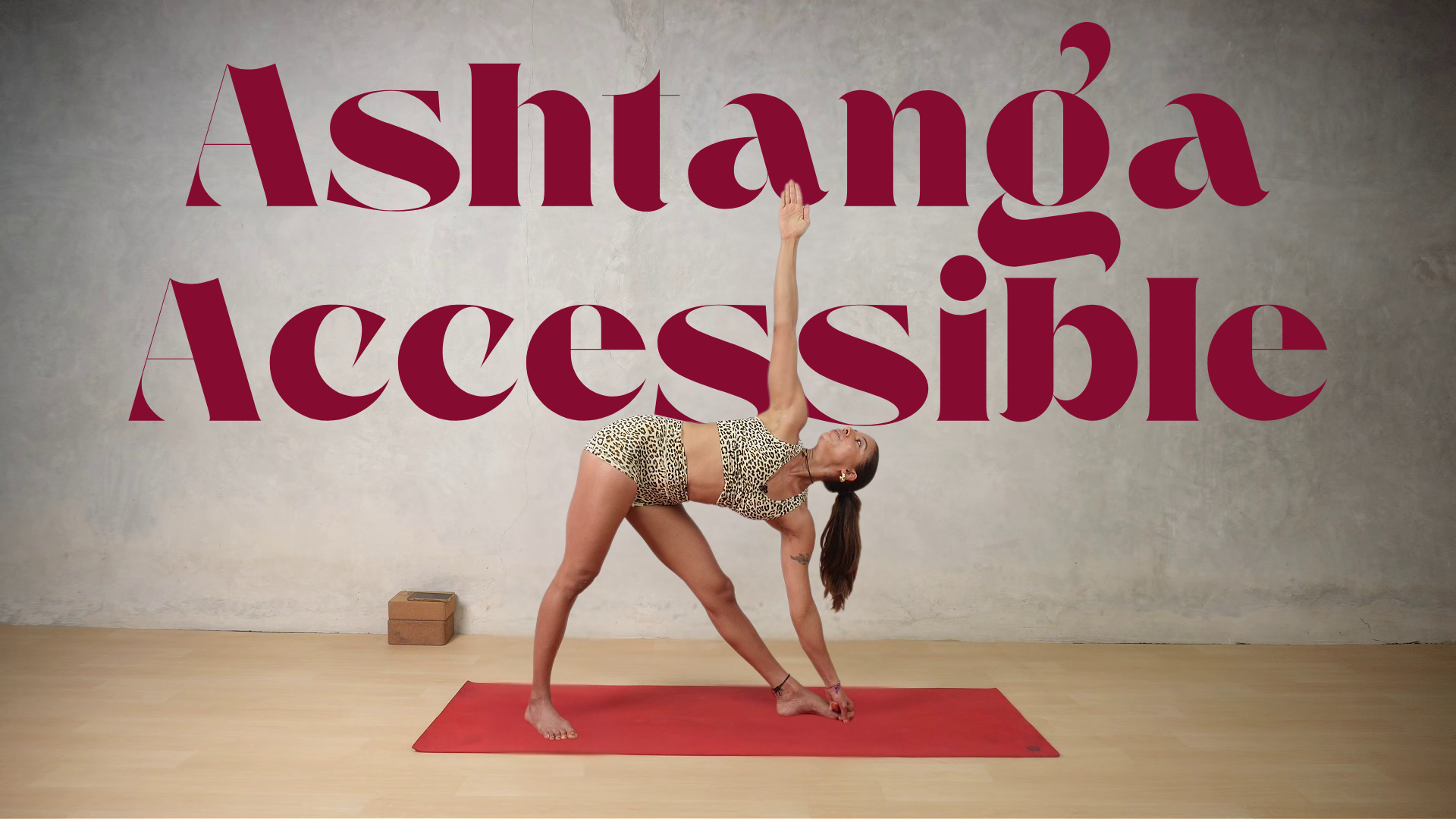
Ashtanga carries a strong image.
Fixed sequences, deep postures, early mornings. For some, this structure feels grounding. For others, it creates distance, pressure, or a sense of inadequacy before even starting.
When the external form takes over, the internal experience is often lost.
When Ashtanga feels out of reach
You might recognize some of these thoughts or sensations:
feeling “not flexible or strong enough” for Ashtanga
discomfort in wrists, shoulders, or knees
focusing on how the pose looks, while feeling disconnected inside
struggling with consistency or discipline
losing motivation when the practice feels repetitive or inaccessible
These experiences don’t mean Ashtanga isn’t for you.

Ashtanga is often approached as something to fit into.
The sequence is followed closely, while the body’s needs are ignored. Modifications feel like compromises, rather than intelligent choices. Over time, this creates tension, frustration, or withdrawal from the practice.
Without adaptation, structure can turn into limitation.
The practice serves the body
Ashtanga was never meant to exclude.
When the practice adapts to the practitioner, energy can flow without force.
Structure becomes support. Discipline becomes steadiness, not pressure.
From this place, Ashtanga can be experienced fully, regardless of age or flexibility.
This course was created to make Ashtanga accessible and sustainable.
The work focuses on adapting the practice intelligently, so the sequence supports the body rather than asking the body to endure it.
Modifications are treated as tools, not shortcuts.
In this course you’ll explore:
ways to modify Ashtanga to support wrists, shoulders, and knees
how to shift attention from external shape to internal experience
building discipline through breath and consistency, not force
staying present with silence and repetition
reconnecting with the energetic quality of the practice
The emphasis is on cultivating a personal, embodied relationship with Ashtanga.
This is a recorded course of approximately two hours.
You can pause, revisit, and study the material as needed.
The material can be paused, revisited, and studied over time.
Most people integrate the work gradually, often over one to two months, as coordination develops.
Access is lifetime, so the course can evolve with your practice.
Who this course is for:
are curious about Ashtanga, but feel hesitant or excluded
think you’re too stiff, too old, or too inexperienced to begin
want structure without rigidity
are looking for a practice that builds energy, focus, and connection
Who this course is not for:
are dealing with an acute injury or recent surgery
want to follow the sequence without any adaptation
are not interested in inner experience or self-observation
Ashtanga Accessible
A practice that adapts to your body
99$
79$
Special launch price valid for two weeks only
One-time payment
Lifetime access
Recorded course: approx. 2 hours
Designed to be revisited over time, as strength and range develop together.
Your Questions, Answered
-
No. This course is suitable even if you’ve never practiced Ashtanga before.
-
No. It’s an adapted approach that preserves the essence of the practice while respecting individual bodies.
-
Yes. The course emphasizes breath, rhythm, and discipline as supports for regular practice.
-
No. This is a recorded course of approximately two hours, allowing you to pause, rewatch, and study details as needed.
-
If you are dealing with an acute injury or recent surgery, this course may not be appropriate at this time. This work is educational and not a substitute for medical or rehabilitative care.
-
You have lifetime access, so you can return to the material whenever it feels relevant.