
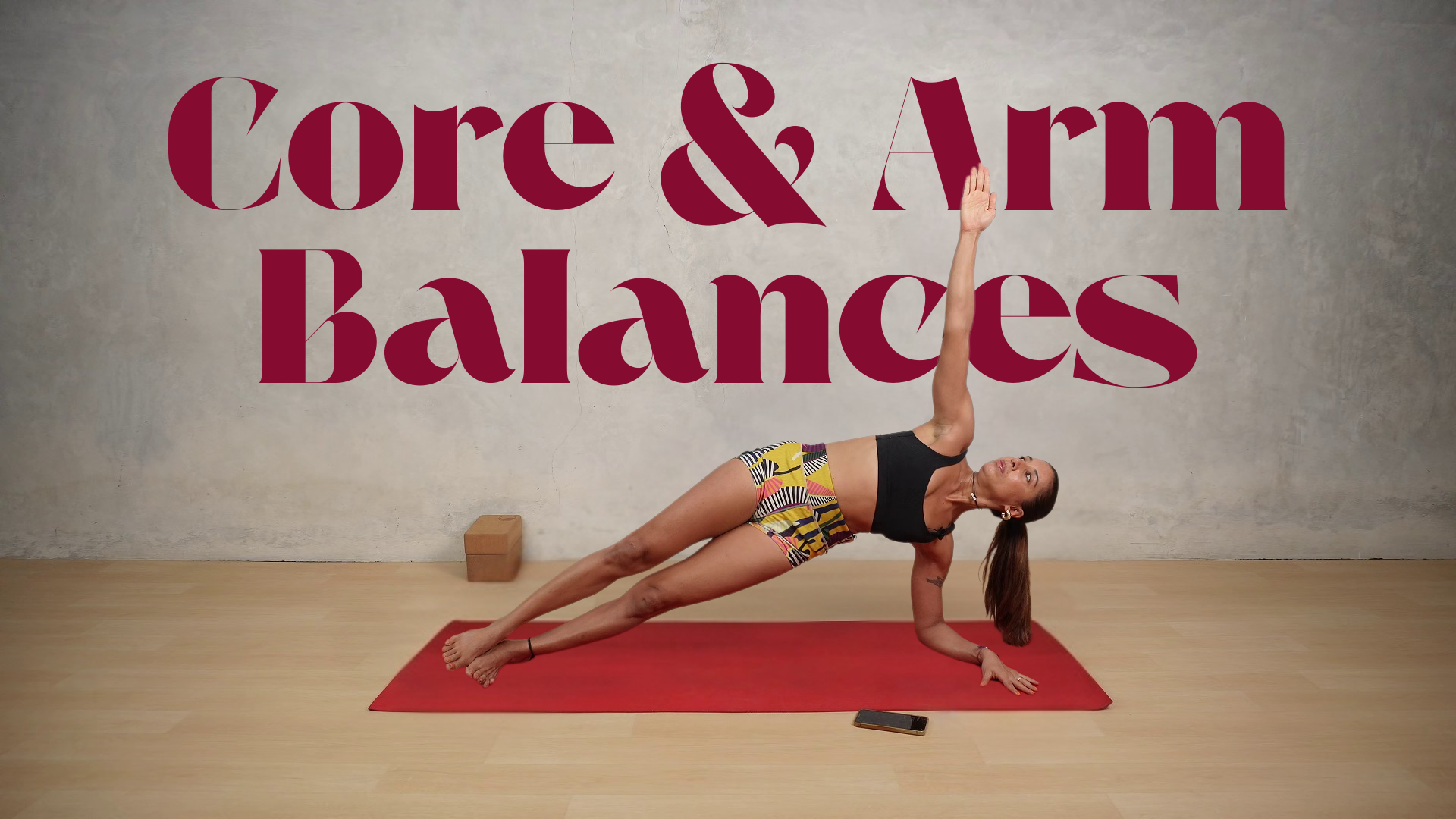
Core & Arm Balances
Strength that allows movement to feel lighter
In many practices, strength shows up as effort.
The body works hard, yet balances feel unstable and transitions feel forced.
This course explores core strength as support, not as tension.
So movement can feel contained, coordinated, and easier to sustain.
Core work is often reduced to aesthetics or endurance.
Abdominal effort is added on top of movement, instead of becoming part of how movement is organized. Over time, this disconnect shows up most clearly in balances, inversions, and transitions.
What looks like a strength issue is often an organization issue.
When effort doesn’t turn into stability
You might notice situations like:
jump-backs and jump-throughs that feel heavy or abrupt
difficulty staying steady in headstand or handstand
strong shoulders, but little sense of lift
tension building in the lower back during balances
uncertainty around how to engage the core without bracing
In these moments, strength is present, but it isn’t supporting the movement.

The core often works in isolation.
The body either tightens excessively or lets go completely. Without clear coordination, effort spreads outward and load ends up where it shouldn’t.
When the center doesn’t organize the movement, balance becomes something to fight for.
Support creates ease
When the core is doing its job, the rest of the body doesn’t need to overwork.
Stability doesn’t come from holding more.
It comes from placing effort where it belongs, so movement can stay responsive.
Strength, when organized, allows softness to emerge.
This course was created to clarify how core engagement actually supports movement.
Rather than adding tension, the work focuses on how the center organizes force, adapts to different demands, and stays present across transitions, balances, and inversions.
The intention is to make strength available, not dominant.
In this course you’ll work with:
drills that support compression and lift for jump-backs and jump-throughs
ways to build stable support in headstand and handstand
a clearer understanding of bracing versus hollowing
organization that reduces unnecessary load on the lower back
reconnecting with abdominal strength in a sustainable way, including post-partum work
The focus is on strength that integrates into movement, rather than interrupting it.

This is a recorded course of approximately two hours.
You can pause, revisit, and study the material as needed.
The material can be paused, revisited, and studied over time.
Most people integrate the work gradually, often over one to two months, as coordination develops.
Access is lifetime, so the course can evolve with your practice.
Who this course is for:
practice yoga and feel unsure about how to use your core
struggle with balances, inversions, or transitions
come from a gym or strength background and want more transfer into movement
are reconnecting with core support, including after pregnancy
Who this course is not for:
are dealing with an acute injury or recent surgery
prefer rigid effort without adaptability
are not interested in refining how strength supports movement
Core & Arm Balances
Strength that allows movement to feel lighter
99$
79$
Special launch price valid for two weeks only
One-time payment
Lifetime access
Recorded course: approx. 2 hours
Designed to be revisited over time, as strength and range develop together.
Your Questions, Answered
-
No. Strength is built through organization and coordination, not force.
-
Yes. The work supports jump-backs, jump-throughs, and balance work through better core organization.
-
Yes, when approached with care. The course includes work aimed at reconnecting with the core safely.
-
No. This is a recorded course of approximately two hours, allowing you to pause, rewatch, and study details as needed.
-
If you are dealing with an acute injury or recent surgery, this course may not be appropriate at this time. This work is educational and not a substitute for medical or rehabilitative care.
-
You have lifetime access, so you can return to the material whenever it feels relevant.